
Why Play-Based Learning is Effective
In today's competitive world, it is natural for parents to feel pressure to give their children a head start through early academic enrichment. However, research increasingly points to the benefits of play-based learning for young children's overall development.
By encouraging children to build skills through exploration and interaction, play-based learning nurtures cognitive growth, language development, social skills, and emotional well-being in ways that early academics may not.
What is Play-Based Learning?
Play-based learning is an educational approach in which children build knowledge and skills through hands-on experiences rather than through rote instruction. Importantly, it is intentional and not simply free time. Through exploration, imagination, movement, and interaction, children are actively making sense of the world around them.
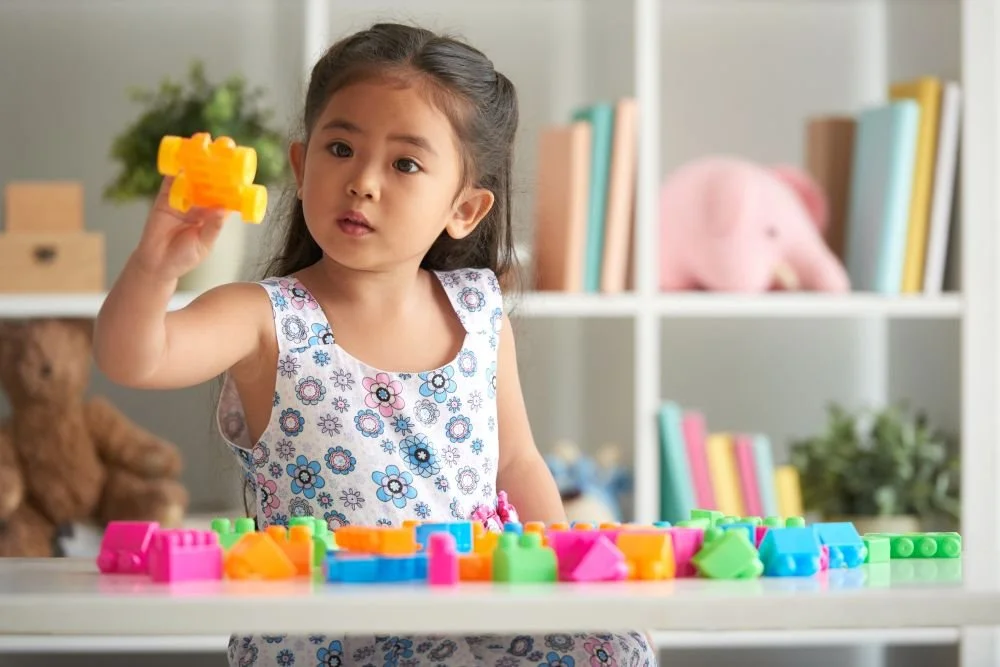
Whether its stacking building blocks to understand balance, acting out stories through pretend play, working through puzzles to improve spatial awareness, these experiences build cognitive, social, emotional, and physical skills simultaneously.
What Do We Mean by Early Academics?
Early academics refers to a formal, structured approach to learning that introduces literacy, numeracy, and writing skills to young children through teacher-led activities. This often involves worksheets, memorization drills, early reading exercises, and handwriting practice.
While starting these tasks early can feel like a head start, this model is largely adult-directed, leaving children with less room for curiosity-driven exploration and creative discovery.
How Young Children’s Brains Actually Learn
In the early years, a child's brain is developing at a remarkable pace, but it’s not yet physiologically wired for abstract thinking or formal instruction. Children at this stage learn best through concrete, real-world experiences.
Specifically, development is most effectively supported through:
Sensory Experiences: Touching, tasting, hearing, and seeing help children process and make sense of new information.
Movement: Physical activity strengthens coordination, focus, and cognitive function.
Repetition: Doing things repeatedly builds neural pathways and reinforces learning.
Social interaction: Engaging with others develops communication, empathy, and emotional regulation.
Key Benefits of Play-Based Learning
Play-based learning supports children across various areas of development, including:
Cognitive Development: Play builds problem-solving skills, strengthens memory, and sharpens attention through activities like puzzles and sorting games.
Language Development: Conversation, storytelling, and role-play give children rich opportunities to expand their vocabulary and practice expressing themselves.
Social Skills: Group play teaches children to share, take turns, and cooperate, laying the groundwork for healthy relationships.
Emotional Development: Through play, children build confidence, learn to manage their emotions, and develop resilience when things don't go their way.
Physical Development: Active play strengthens gross motor skills, while drawing and building refine fine motor control.
Limitations of Pushing Academics Too Early
While the intention to introduce formal academics early can be positive, there are a few potential drawbacks worth considering:
Stress and Pressure: Sitting through long, structured lessons and formal assessments can be overwhelming for young children, making learning feel like a burden rather than an enjoyable experience.
Reduced Motivation: When children are pushed too hard too soon, they may begin to associate learning with pressure, which can dampen their natural enthusiasm over time.
Rote Learning without Understanding: Memorizing facts or completing drills does not always translate into genuine comprehension, leaving gaps in a child's foundational understanding.
Less Creativity and Curiosity: A heavily academic environment often leaves little room for imaginative thinking, which is just as important for long-term development as any academic skill.
Play-Based Learning and School Readiness
Parents may worry that play-based learning may leave their child unprepared for the demands of formal schooling. In reality, it builds many of the foundational skills that make the transition to school smoother and more successful:
Better Attention Span: Engaging in sustained play activities trains children to focus on a task, an ability that directly supports classroom learning.
Better Communication: Through guided play, children practice listening, expressing ideas, and engaging in back-and-forth conversations, all of which are essential in a school setting.
Better Emotional Regulation: Play provides children with a safe space to experience and manage their emotions, helping them navigate the challenges of a structured school day with greater ease.
Better Ability to Follow Instructions: Participating in group games and structured play routines naturally teaches children to listen, wait their turn, and follow directions.
What a Good Play-Based Learning Environment Looks Like
A play-based learning environment must be designed to support every child's development. Usually, it includes elements such as:
Structured Routines: Predictable daily schedules give children a sense of security, helping them feel settled and ready to engage.
Guided Play Activities: Educators intentionally plan activities with clear learning goals, ensuring play is relevant and developmentally appropriate.
Safe Environment: The physical space is welcoming, well-organized, and designed to encourage exploration without unnecessary risk.
Trained Educators: Skilled teachers know when to step in to scaffold learning and when to step back to let children lead.
Balance Between Free Play and Guided Learning: A good program combines child-directed exploration with structured activities, giving children both autonomy and direction in their learning journey.
When Do Academics Naturally Fit in?
Academics are still important in play-based learning, but the key is introducing them at the right stage and in the right way. When children eventually transition into more formal academic learning, those early play experiences make new concepts feel familiar rather than foreign. Consequently, they’ll likely develop a more positive relationship with learning overall.
Moreover, play-based learning lays the groundwork for academic work through various means, including:
Reading: Storytelling, rhyming games, and picture books build phonemic awareness and vocabulary, giving children a strong foundation for literacy before formal reading instruction begins.
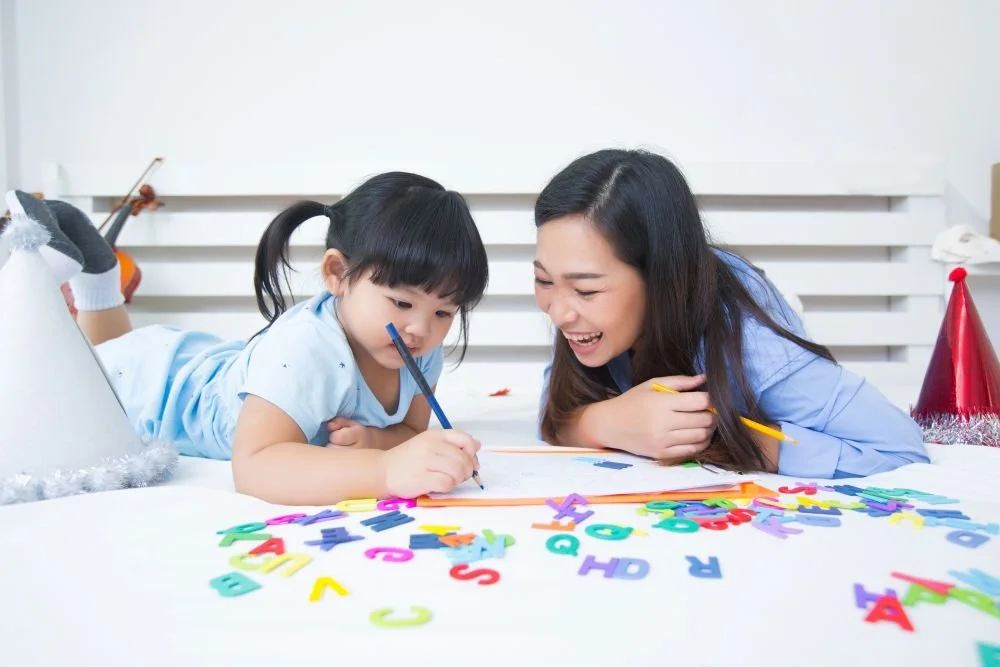
Writing: Drawing, mark-making, and hands-on fine-motor activities prepare children's hands and minds for the demands of writing.
Mathematics: Sorting objects, building with blocks, and counting during play introduce numerical concepts and pattern recognition in a way that feels natural and intuitive.
How Parents Can Support Play-Based Learning at Home
Choosing an inclusive preschool like The Growing Academy lets you access early education that embraces play-based learning. At the same time, you can reinforce that spirit of curiosity and exploration through simple, everyday moments:
Reading Together: Sharing stories builds vocabulary, imagination, and a love for language.
Pretend Play: Encouraging role-play helps children process experiences and develop social and emotional skills.
Building and Drawing: Open-ended activities such as block building and drawing strengthen creativity and fine-motor development.
Everyday Learning Through Activities: Cooking, gardening, and grocery shopping are all rich opportunities to naturally explore numbers, language, and problem-solving.
Ultimately, play doesn’t have to be a break from education. Instead, it can be a meaningful tool for helping young children enjoy learning.